Multigenerational Travel Planning: Why Families Are Choosing Experiences Over Inheritance
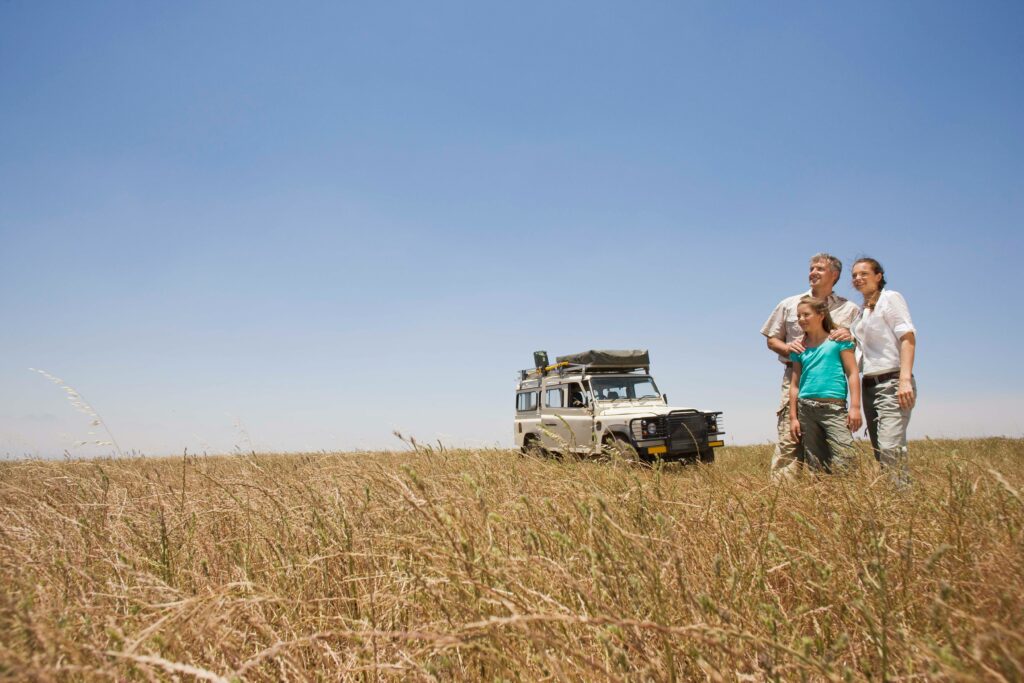
The Morning I Cried on Safari
I was wrapped in a blanket, a warm water bottle resting on my lap, the vehicle moving quietly through the bush just before dawn. The air was cool. The birds had just begun to call. The sun had not yet fully risen.
And then, unexpectedly, I started to cry.
Not from sadness. From recognition.
It took a moment to understand what I was feeling. Then it came clearly: this stillness, this particular kind of presence—it reminded me of early mornings checking cattle as a child. Of nights under a sky so wide you could see the Milky Way from edge to edge. Of a life where the most important thing happening was simply being together, outside in nature, paying attention.
I had spent years moving away from that life. Building something polished, structured, refined. And somewhere along the way, I had quietly lost something I didn’t realize I still needed.
Safari gave it back to me.
And in that moment, I understood something I now see play out in the families I work with every day:
The most meaningful travel experiences are not about where you go. They are about how you feel—and who you are with when it happens.
This is the work I do—designing multigenerational journeys that allow families to experience time together in a more intentional way.
What Is Multigenerational Travel—and Why It Matters Now
Multigenerational travel refers to trips that bring together three or more generations—typically grandparents, parents, and children—into a shared experience designed to work across different ages, interests, and energy levels.
And right now, it’s not just a trend. It’s a shift.
More families—especially grandparents—are rethinking the idea of inheritance. Instead of asking what will I leave behind, they are asking:
What can we experience together now, while we still can?
This is where luxury multigenerational travel becomes something more than a vacation. It becomes a way to create memory, connection, and perspective in real time.
Not someday. Now.
Why Families Are Choosing Experience Over Inheritance
For decades, the default model was preservation: build wealth, protect it, and pass it down.
But many families are beginning to realize something quieter and more urgent:
Money, left behind, is abstract.
Time, spent together, is not.
A child seeing the ocean for the first time.
Grandchildren watching wildlife on an African safari.
A family gathered at a long dinner table in a city they’ve never seen before.
These are not travel highlights.
They are formative experiences.
And increasingly, families are choosing to invest in those moments while they can still share them.
What It Feels Like When It Works
I think about a family I know who planned a trip for a father’s milestone birthday. They poured love into every detail — the pacing, the places, the moments deliberately built in for the family to simply be together.
Afterward, the father sent a note. He had felt, in his words, loved and celebrated.
Not impressed. Not entertained. Loved.
It didn’t matter who had booked what or who had paid for it. What mattered was that he felt it — that the people around him had chosen to gather, to show up, to make something together that couldn’t have happened any other way.
That is what a multigenerational trip, planned with genuine care, can do. It doesn’t just move a family through a destination. It tells every person at the table: you are worth this.
Once you understand what you are really trying to create, the question of how to plan it becomes much clearer.
How to Plan a Luxury Multigenerational Trip
Planning a multigenerational family trip is not the same as planning a standard vacation. It requires a different level of coordination, emotional awareness, and expertise.
1. Work with a Multigenerational Travel Advisor
The most successful trips begin with the right advisor.
A specialized family travel advisor understands:
- Which safari camps are appropriate for children
- Which destinations work across wide age ranges
- How to balance activity with rest
- How to manage family dynamics without friction
This is not just logistics. It’s orchestration.
2. Establish a Clear Budget Early
A realistic starting point for luxury multigenerational travel:
- $1,000 per person per night (baseline)
- $1,300-$3,300 per person per night for destinations like Amalfi Coast and Africa
Children do not significantly reduce costs due to room configurations and occupancy requirements.
Clarity here prevents tension later—and leads to better decisions.
3. Choose the Right Destinations
Not all destinations work equally well for multigenerational groups.
Africa (Safari Travel with Kids)
- Highly engaging for all ages
- Structured but immersive
- Ideal for shared experiences
South America
- Strong value relative to Europe
- Wide variety (wildlife, culture, landscapes)
- Excellent for families seeking depth without peak pricing
Mediterranean Cruises
- Logistically seamless
- Eliminate constant packing and moving
- Particularly strong for large family groups
For families considering Italy in peak summer, a luxury Mediterranean cruise often delivers a significantly better experience—both financially and practically.
4. Create Structure Without Over-Scheduling
The best trips include:
- Planned anchor experiences
- Open time for spontaneity
- Flexibility for different energy levels
The goal is not to maximize activity.
It’s to create space for moments that feel unrepeatable.
5. Design Around a Meaningful Occasion
The most impactful trips are often anchored in something:
- 65th, 70th, or 80th birthdays
- Anniversaries
- Family milestones
This gives the trip emotional weight—and a shared purpose.
A Simple Multigenerational Travel Planning Checklist
- Decide early: this is a gift, not a negotiation
- Identify one family point of contact
- Set a realistic budget before choosing a destination
- Work with a specialized travel advisor
- Hold an initial family call to align expectations
- Choose destinations suited to all age groups
- Build in unscheduled time
- Anchor the trip around a milestone or shared goal
Why This Work Matters
This is not just about travel planning.
It is about helping families create something that would not otherwise happen.
Because the moments that stay with us—the ones that resurface years later—are rarely the efficient ones. They are the ones where something shifted. Where time slowed down. Where we were fully present.
A child standing at the edge of the ocean for the first time.
A grandparent watching that moment unfold.
A family sitting together, aware—if only briefly—that this time is finite.
These are not vacations.
They are the experiences that shape how a family remembers itself.
Frequently Asked Questions About Multigenerational Travel
What is the best age to start traveling with grandchildren?
My father-in-law once challenged my thinking on traveling with young children. I had said it made sense to wait until they were old enough to remember it. He smiled and replied, “I don’t remember what happened two weeks ago—but it still shaped who I am today.”
There is no perfect age. Younger children respond instinctively to new environments, while older children and teenagers often retain deeper, long-term memories. The best time is simply when the family can travel together.
How far in advance should we plan?
- Africa and peak-season Europe: 12–18 months
- South America and cruises: 9-12+ months
The best properties and accommodations for families book early.
What are the best destinations for mixed-age families?
Not all destinations work equally well across three generations. The best ones reduce friction while naturally bringing people together.
Africa, South America, and luxury cruises consistently deliver—offering built-in structure, ease of movement, and shared experiences across ages.
Beach destinations can also work beautifully when centered around the right setup. Private villa rentals in Greece, for example, offer space, flexibility, and a sense of togetherness that hotels often can’t replicate.
In the end, it’s less about the destination itself—and more about how well it supports the way a family wants to spend time together.
How much does a luxury multigenerational trip cost?
- Starting around $1,000 per person per night
- Increasing to $1,300-$1,500++ for destinations like Italy and Africa
How do I choose the right travel advisor?
Look for someone who:
- Asks about your family before your dates
- Understands multigenerational dynamics and has traveled with children
- Has direct experience planning similar trips
- Can clearly explain what works—and what doesn’t
The Legacy You Are Actually Building
Think about what remains.
Not the itinerary. Not the flights.
A moment. A feeling. A shared experience that becomes part of your family’s story.
A family dinner on a terrace overlooking the Acropolis. The adults talking, the candles low, the ancient city glowing below. And a ten year old boy, jet lagged and fighting it with everything he has, slowly losing the battle with sleep at the table — but not leaving, not asking to go back to the hotel, because somewhere in him he knows. He knows this moment is different. That it is important. That it is a privilege.
That child will not remember the details of the conversation. But he will carry that feeling — of being included in something larger than himself, of sitting at that table, of being trusted with that moment — for the rest of his life.
A grandparent watching it all, fully present.
That is the legacy.
Not what you leave behind.
What you choose to experience together.
Start Planning Your Multigenerational Family Trip
If you are considering a luxury multigenerational trip—whether an African safari, a Mediterranean cruise, or a milestone family journey—working with a specialized advisor ensures the experience feels effortless from beginning to end.
I work closely with families to design trips that balance logistics, emotion, and experience—so what remains is exactly what it should be.
The time together.


